

Search “concrete contractor Tyler TX” right now and look at the top of Google Maps. As of this writing, the business holding the number one spot has 14 reviews. Fourteen. The next core algorithm update could reshuffle that result tomorrow, but the point is not who holds the spot. The point is what it took to get there. In Dallas, a business with 14 reviews would not crack the visible results for the same search. That gap is not random, and it is not permanent. It is a market maturity gap, and it represents the single biggest opportunity available to East Texas service businesses right now. The Google Maps landscape in Tyler, Longview, Marshall, Nacogdoches, Jacksonville, Lufkin, Lindale, Athens, and Canton looks nothing like what service business owners in Houston or DFW have been dealing with for years. The floor is lower. The competition is thinner. And the window for businesses willing to move on it is measurable, not theoretical. This post breaks down what the map pack actually looks like across East Texas right now, why it looks that way, and how long that gap is likely to stay open.
What the Google Maps Results in Tyler Actually Look Like Right Now

Most of the advice floating around about Google rankings is written for businesses competing in Dallas, Houston, Austin, or San Antonio. Markets where the top results have been building their online presence for five to seven years and where review counts start at 80 and climb from there.
East Texas is not that market. Not yet.
At Digital Meshworks, we audit Google Business Profiles across East Texas service categories daily. I pulled the actual top results for five service searches across Tyler and Marshall. No estimates. No national averages. These are the real numbers sitting at the top of Google Maps right now. (Review data pulled June 2026.)
For concrete work in Tyler, the top three results have 14, 10, and 63 reviews. The business holding the number one spot is doing it with 14. For land clearing in Tyler, the local top three sit at 28, 14, and 17. Tree service runs heavier, with the top three at 331, 107, and 62, but it drops to 24 by the fifth spot.
Then there is roofing, which is the exception that proves the point. In Tyler, the top three roofers have 217, 507, and 737 reviews. Roofing is a higher volume, higher competition trade nationally, so the review race runs hotter everywhere, including here.
But watch what happens to that same trade 30 miles east. In Marshall, the entire top four for roofing fits between 16 and 72 reviews. Same service. Smaller town. A fraction of the reviews needed to lead.
Two things jump out of that data. First, the number of reviews you need depends on your trade and your specific market, not just your city. A roofer in Marshall is playing a completely different game than a roofer in Tyler. Second, review count alone does not decide it. In the Tyler concrete search, the business with 14 reviews is outranking one with 63. Google weighs proximity and profile relevance at least as heavily as review totals. Reviews get you into the conversation. They do not win it by themselves.
Published research backs this up. Studies consistently show a clear ranking lift when a business crosses from 9 to 10 reviews, with 15 to 20 needed to compete in most categories and 50 or more with a 4.3 plus star average to push into the top three in competitive markets (Sterling Sky 2025, BrightLocal 2026). In high volume categories in major metros, that line moves past 100.
The takeaway for East Texas service businesses is straightforward: the competitive floor here is low, and it is beatable with consistent effort, not a massive budget.
Why Most East Texas Service Businesses Are Competing on the Wrong Platform
Here is a pattern that plays out in every East Texas market. A business owner posts regularly on Facebook, gets likes, gets comments, maybe even gets tagged in a local group recommendation. It feels like momentum. The algorithm rewards engagement, so they keep going.
Meanwhile, the person typing “roofer near me” or “best salon in Longview” into Google has never seen any of that Facebook activity. They are not browsing. They are looking to hire someone in the next 24 hours. And the business showing up in their search results is not the one with the most Facebook followers. It is the one with a complete Google Business Profile, a decent review count, and enough relevance signals for Google to trust the match.
These are two completely different customer behaviors. Someone asking “who is the best landscaper in Lindale?” in a Facebook group wants a referral from someone they trust. That is word of mouth, just digital. Someone searching Google is showing intent to purchase, or at minimum, researching toward a future purchase. They want options, they want to compare, and they want to call.
The service businesses investing all their visibility effort into Facebook are not wrong for being there. Social proof matters. Community presence matters. But they are leaving the highest intent customers on the table by not showing up where those customers are actually searching. The part timers and side hustlers running their entire business through Facebook groups are not your competition for Google Maps leads. They are playing a different game on a different field entirely.
The businesses that figure this out first are the ones filling the gap in the map pack right now, while everyone else is still counting likes.
How Long Does This Window Stay Open for East Texas Service Businesses?
Every local market follows the same adoption curve when it comes to Google visibility. The speed varies, but the phases do not.
Phase 1 is where most of East Texas sits right now. The majority of Google Business Profiles are incomplete. Review counts are low. Posting activity is nonexistent. Most service businesses either have not claimed their profile or claimed it once and never touched it again. The map pack in most categories is held by whoever showed up first, not whoever earned it.
Phase 2 is what happens when the early movers start optimizing. Review counts climb. Profiles get filled out. Businesses start posting updates, adding photos, responding to reviews. The map pack begins to lock as the gap between optimized and unoptimized profiles widens. Displacing someone who has been actively building for a year becomes significantly harder than beating someone who has been sitting idle.
Phase 3 is where Dallas and Houston are now. The floor is high. Incumbent businesses have years of review velocity, citation depth, and content behind them. Breaking into the top three requires serious, sustained investment. For most service businesses starting from zero in a Phase 3 market, the cost and timeline are prohibitive.
Tyler is transitioning from Phase 1 to Phase 2 right now. You can see it in the data. Roofing is already in Phase 2, with the top spots locked behind 200 plus reviews. But concrete, land clearing, and dozens of other service categories are still wide open, with top positions held by businesses with fewer than 30 reviews.
The surrounding markets tell an even clearer story. Longview, Marshall, Nacogdoches, Jacksonville, Lufkin, Lindale, Athens, and Canton are still firmly in Phase 1 for most service categories. The Marshall roofing data makes that plain: the entire top four fits between 16 and 72 reviews. That is a market where a focused local business could realistically reach the top three within six to twelve months of consistent effort.
This window is not theoretical. It is measurable, and it is closing one category at a time.
Not sure where your business falls on this curve? The SOAR Self Assessment will show you in a few minutes.
What the Current Map Pack Holders Actually Look Like
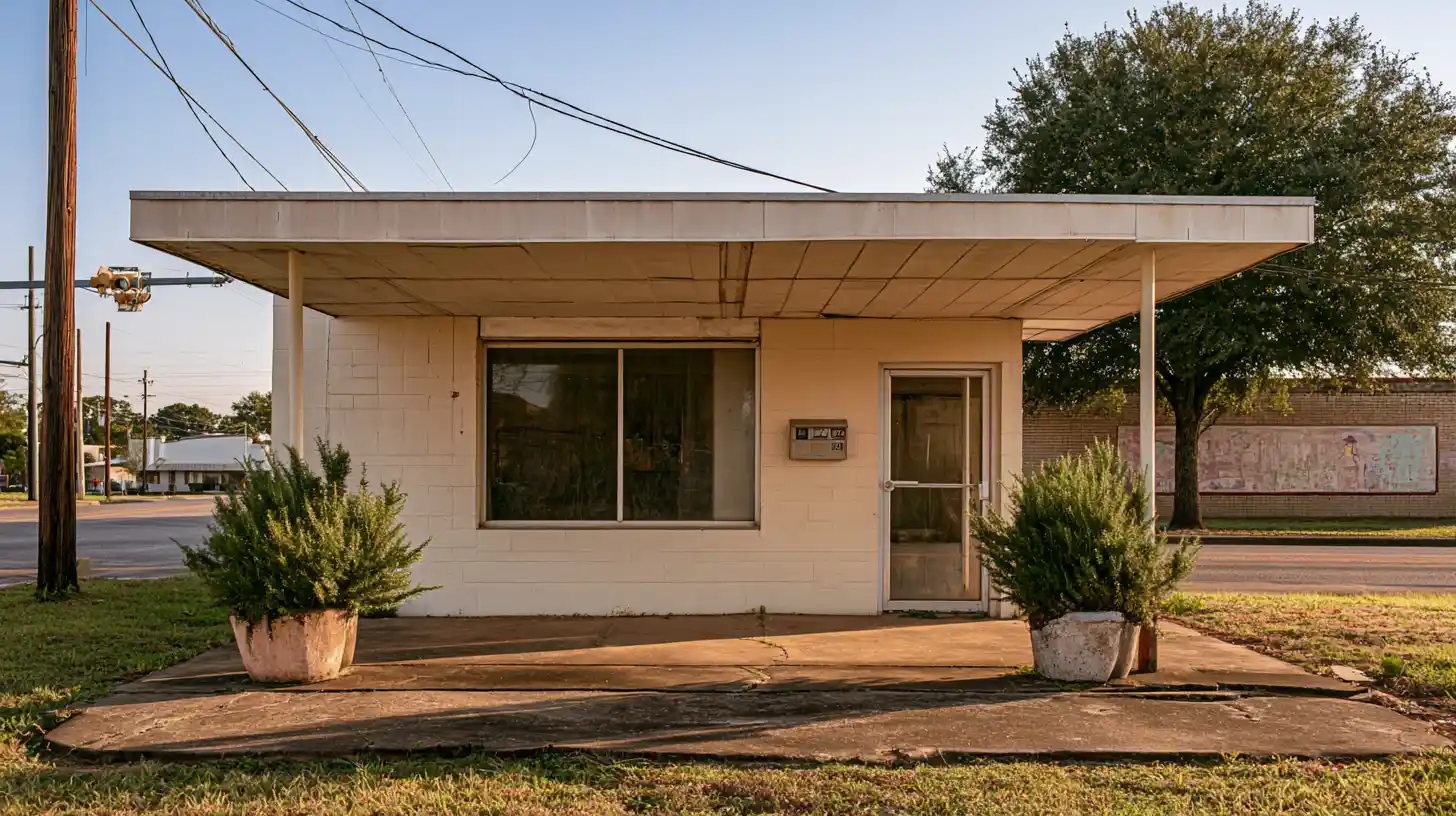
The businesses sitting at the top of Google Maps results across East Texas are not, for the most part, well oiled marketing machines. They are there because they showed up and nobody else did.
Here are the patterns that show up over and over in daily audits of Google Business Profiles across East Texas service categories.
Unclaimed or unverified profiles. This is the biggest one. A real business with real reviews that never claimed its own listing. They cannot edit their information, add services, or respond to reviews. Research shows that more than half of local businesses have not fully claimed or optimized their profile. In smaller East Texas markets, that number tracks even higher based on daily audit data.
Wrong or generic categories. A business doing specific work listed under a catch all like “construction company” instead of their actual trade or service type. The primary category is the single strongest relevance signal for Google Maps. If it is too broad, you are telling Google you are less relevant for the specific thing people are actually searching for.
Incomplete profiles. Missing hours, no business description, no services listed, no products section filled in. Published data shows that complete profiles generate roughly seven times more clicks than incomplete ones (BrightLocal 2026). Most of the profiles sitting in the East Texas map pack right now would not pass a basic completeness check.
National companies with generic location pages. Out of area businesses running location pages for cities they do not actually serve locally. Wrong city photos, no local content, nobody local behind it. In one Tyler service category, a national operator’s local page displays a skyline photo from a completely different city. These listings are displaceable by any focused local business willing to do the basics right.
Empty update feeds. No Google posts, ever. A profile that has not been touched in months reads as inactive to Google and to customers.
Thin or stale photo libraries. Listings perform better with 25 to 30 photos covering the business exterior, team, and completed work, refreshed regularly. The common version in East Texas is a listing with five blurry photos uploaded a year ago.
Inconsistent business information across the web. When the business name, address, or phone number reads differently on Google than it does on Yelp, the Yellow Pages, or the business website, Google gets less confident about where that business actually is. The worst version is a profile pinned to the wrong city or carrying a phone number from a different area code.
Every one of these problems is fixable. And every business holding a map pack spot with these issues is a business that can be displaced by a local operator who takes the time to do the fundamentals right.
What Moving Now Actually Looks Like

This is not advanced marketing. This is the foundation work that most service businesses skip because nobody has explained why it matters in plain terms.
Claim and complete your Google Business Profile. If you have not done this, nothing else matters. Fill in every field: accurate business name, correct address, real phone number, full hours, business description, service list, and the right primary category for what you actually do. This is step one, and it is free.
Build service pages on your website that target what people actually search. If you run a tree service in Tyler, you need a page that says “tree service Tyler TX” in the title, the heading, and the content. Not a homepage that lists twelve cities. Individual pages targeting the actual searches people type. This applies whether you are a salon in Longview, a pest control company in Nacogdoches, or a cleaning service in Jacksonville. The specificity is what tells Google you are relevant to that search in that city.
Post to your Google Business Profile weekly. Updates, photos of completed work, service highlights, seasonal notes. It does not need to be polished. It needs to be consistent. A profile that posts weekly signals to Google that the business is active and engaged.
Respond to every review. Every single one. Good reviews get a thank you. Critical reviews get a professional, measured response. Published research shows consumers are 80% more likely to choose a business that responds to all of its reviews (BrightLocal 2026).
Build citations. Get your business listed consistently on the directories that matter for your trade and location. Same name, same address, same phone number, everywhere. This is not glamorous work, but it builds the consistency signals Google uses to verify that you are who and where you say you are.
None of this is advanced. None of it requires a massive budget. Most service business owners will read this list, agree with every point, and not do it because they are running a business. That is a completely reasonable outcome, and it is also the reason the window stays open for those who do act, whether on their own or with help.
The businesses doing this now, while the map pack is still soft, are the ones who will hold those positions when the market tightens. The ones who wait will be competing in Phase 2 or Phase 3, where the same effort produces half the result.

Where Does Your Business Stand Right Now?
If you are not sure whether your Google Business Profile is helping you or holding you back, the SOAR Self Assessment will tell you. It covers the four areas that determine whether customers find your business or find your competitors: your systems, your optimization, your attention signals, and your response infrastructure.
It takes a few minutes. You walk away knowing exactly which gaps are costing you calls and what to fix first.